Regulatory Updates
UGC Issues Equity Regulations, 2026: A Path-Breaking Step Towards Eradicating Caste-Based Discrimination in India’s Higher Educational Institutions
Lorem ipsum dolor sit amet, consectetur adipisicing elit, sed do eiusmod tempor incididunt ut labore et dolore.

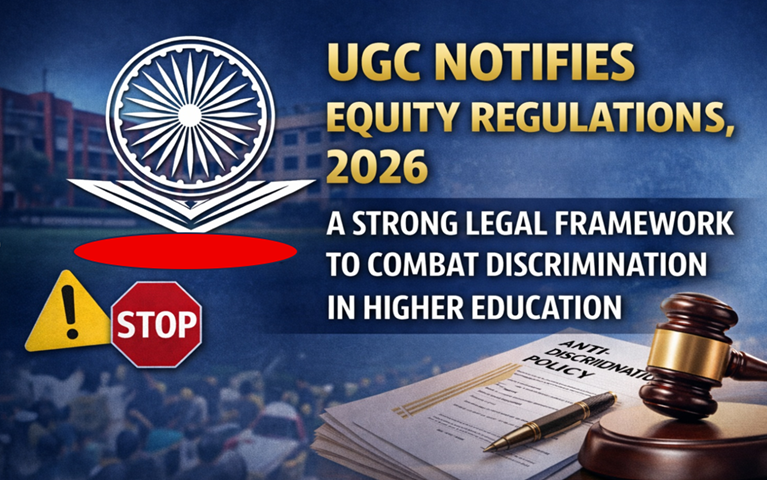
The Supreme Court of India’s proceedings in Writ Petition (Civil) No. 1149 of 2019, Abeda Salim Tadvi and Anr. v. Union of India, mark one of the most consequential step in the governance of higher education in recent decades for eradicating caste-based discrimination and bias.
On 15-01-2026, A Bench comprising the Hon’ble Chief Justice of India Mr. Surya Kant, Hon’ble Mr. Justice Joymalya Bagchi, and Hon’ble Mr. Justice Vijay Bishnoi was informed that the University Grants Commission (UGC) had notified the University Grants Commission (Promotion of Equity in Higher Education Institutions) Regulations, 2026 on 13 January 2026, bringing them into immediate effect in compliance of the directions of the Supreme Court of India in the Writ Petition (Civil) No. 1149 of 2019.
Following the notification of the 2026 Regulations, the University Grants Commission has faced significant backlash from certain sections of the social communities, who view the framework as excessive, intrusive, or unnecessary.
Critics argue that the regulations may lead to excessive regulation of campuses, undermine institutional autonomy, and operate on a presumption of guilt rather than fostering dialogue, with some expressing concern that, much like criticisms often raised against the SC/ST Act, the framework could be misused through frivolous or motivated complaints against students belonging to upper castes.
The 2026 notification of UGC cannot be seen in isolation. It is the direct consequence of the Supreme Court’s earlier order dated 24 April 2025, wherein the Court directed the UGC to notify the Draft Regulations, 2025.
For decades, caste-based discrimination in Higher Education Institutions (HEIs) remained confined to committee reports, fact-finding exercises, and policy advisories, rarely translating into effective institutional reform. This inertia was finally challenged when the mother of Dr. Payal Tadvi approached the Supreme Court of India through a public interest litigation, seeking the creation of a genuinely non-discriminatory and dignified environment within higher educational spaces. The petition arose from the tragic loss of her daughter, Dr. Payal Tadvi, whose life was cut short amid allegations of persistent caste-based discrimination and institutional bias. It is against this deeply humane and constitutional backdrop that the 2026 Regulations must be understood. They seek to decisively break from decades of passive acknowledgment and usher in a legally enforceable framework that transforms equity from a moral aspiration into an institutional mandate. The correct explanation of the UGC regulations 2026 is given hereinbelow-
The University Grants Commission (Promotion of Equity in Higher Education Institutions) Regulations, 2026 treat discrimination in higher education is not merely individual misconduct, but often systemic, subtle, and structural. By defining caste-based discrimination [Section 3(c)] and discrimination [Section 3(e)] in expansive terms, the regulations ensure that indirect exclusion, humiliation, and institutional bias are no longer invisible or legally elusive.
Caste-Based Discrimination – Section 3(c)
Discrimination solely on the basis of caste or tribe against members of:
- Scheduled Castes (SC),
- Scheduled Tribes (ST),
- Other Backward Classes (OBC).
This definition makes caste-based bias a clearly identifiable and punishable wrong.
Discrimination – Section 3(e)
Discrimination is broadly defined and includes:
- Any unfair, biased, or differential treatment, whether explicit or implicit,
- Based on religion, race, caste, gender, place of birth, disability, or any combination,
- Any act that impairs equality in education or violates human dignity.
This wide definition ensures that subtle, indirect, and structural discrimination is also covered.
The concept of equity under Section 3(f) moves beyond formal equality, demanding a level playing field—an idea deeply rooted in Article 14’s substantive equality jurisprudence.
Equity – Section 3(f)
Equity means creating a level playing field where all stakeholders can equally enjoy their legitimate rights and opportunities.
Perhaps the most transformative aspect of the 2026 Regulations is the shift in responsibility. Every HEI is now under a statutory duty to eradicate discrimination and promote equity, with the Head of the Institution made personally accountable for compliance. This is not symbolic governance; it is command responsibility.
Mandatory Duties of Higher Education Institutions (Section 4)
Under the regulations, every HEI is legally bound to:
- Eradicate discrimination in all forms
- Promote equity among students, faculty, and staff
- Take preventive and protective measures without prejudice to caste, religion, language, gender, or disability
- Not permit or condone discrimination under any circumstances
Importantly, the Head of the Institution is made personally responsible for ensuring compliance.
The mandatory constitution of Equity Committees and the establishment of 24×7 Equity Helplines introduce real-time access to justice within campuses. Confidentiality safeguards and escalation mechanisms ensure that fear of retaliation
24×7 Equity Helpline: A New Safety Net (Section 6)
Each HEI must:
- Operate a round-the-clock Equity Helpline
- Ensure access even through the affiliating university if a college helpline is non-functional
- Maintain confidentiality of the complainant’s identity, if requested
The helpline can be accessed by any stakeholder in distress due to discrimination.
Concrete Measures to Promote Equity (Section 7)
HEIs are required to implement institution-wide reforms, including:
- Mandatory undertakings from students, faculty, and staff to uphold equity
- Display of regulations and helpline details on official websites
- Orientation meetings involving students, parents, faculty, police, and district administration
- Transparent and non-discriminatory allocation of:
- Hostels
- Classrooms
- Mentorship groups
- Display of equity posters and organization of workshops
- Engagement of professional counsellors
- Protection of complainants and witnesses from retaliation or victimisation
The detailed procedure under Section 8, with strict timelines for meetings, reports, and final action, reflects judicial impatience with bureaucratic delay. Equity, under these regulations, is not something to be studied endlessly; it is something to be delivered promptly.
What Happens When Discrimination Is Reported? (Section 8)
Step-by-step procedure:
- Complaint may be filed:
- Online,
- In writing,
- By email to the Equal Opportunity Centre (EOC),
- Or through the Equity Helpline.
- If a prima facie criminal offence is found, police authorities are informed.
- Equity Committee must meet within 24 hours.
- Report to be submitted within 15 working days.
- Final action by the Head of Institution within 7 working days.
- If the complaint is against the Head of Institution, it is escalated to the higher authority.
What finally distinguishes the 2026 Regulations from their 2012 predecessor is enforcement. Section 11 empowers the UGC to impose severe institutional consequences, including derecognition, withdrawal of degree-granting authority, and exclusion from national schemes. This marks a clear message: discrimination is not an internal matter of campus culture, but a violation that attracts regulatory and financial consequences.
Strict Consequences for Non-Compliance (Section 11)
If an HEI violates these regulations, UGC may:
- Debar it from UGC schemes
- Bar it from offering degree programmes
- Prohibit ODL and online courses
- Remove it from the UGC’s recognized list under Sections 2(f) and 12B of the UGC Act
Multiple penalties may be imposed, along with additional punitive action on a case-to-case basis.
Why These Regulations Matter
In conclusion it can be said that the 2026 Regulations mark a turning point in Indian higher education by recognizing discrimination as a systemic issue, providing clear remedies and accountability, and giving students and faculty institutional protection with legal backing.

Regulatory Updates
The Examination of Supreme Court of India Law Clerk-cum-Research Associate is on 7th March 2026 what applicants must understand.

The examination for the post of Law Clerk-cum-Research Associate in the Supreme Court of India is scheduled to be held on 7 March 2026. Applicants must clearly understand that this examination is a two-stage Computer-Based Test, consisting of an objective (MCQ) paper followed by a subjective paper on the same day. Proper time management, familiarity with constitutional law, judicial precedents, and strong legal research and writing skills are essential for success. Candidates are advised to carefully read the examination instructions and prepare accordingly.
Paper -1
Total duration of Paper -1 examination is 150 minutes.
- The Question Paper consists of Multiple Choice Questions as follows:
| Section Name | Question From | Question To | Count of questions |
| Comprehension Based Questions | 1 | 15 | 15 |
| Constitutional Law | 16 | 35 | 20 |
| Civil Procedure Code | 36 | 45 | 10 |
| Contract Act | 46 | 55 | 10 |
| Indian Penal Code | 56 | 73 | 18 |
| Law of Evidence | 74 | 86 | 13 |
| Code of Criminal Procedure | 87 | 96 | 10 |
| Latest Developments in Law | 97 | 100 | 4 |
Paper -2
| Sr. No. | Question Type | Description | Requirement | MM |
| Question -1. | Brief Preparation | Brief synopsis or précis of a case file not more than 750 words | a. Identification and marshalling of the relevant facts b. Legal issues before HC & Appellate Tribunal c. Analysis of Issues by HC in the impugned decision d. Ratio of impugned decision e. Relevant grounds before the Supreme Court f. structural Clarity & brevity | 150 |
| Question -2. | Preparation of a Draft Research Memo | Reasoned memo not longer than 500-750 words on the issue in question. | a. Use of relevant legal sources; b. Use of legal language c. Analysis of law and applicable laws to the facts d. Opinion structuring | 75 |
| Question -3. | Essay on given topics | One out of 4 topics ought to answer | 75 |
Exam Day Structure (Important)
- Date: 07 March 2026
Shift 1 – MCQ Exam
- Entry Time: 07:30 AM
- Reach by 7:00 AM to avoid last-minute issues.
Shift 2 – Subjective Exam
- Entry Time: 12:30 PM
- Carry the same documents again (don’t leave the venue casually).
Must-Carry Documents
- Admit Card (printout)
- Valid Photo ID (Aadhaar / DL / Passport)
- Blue/Black pen (if permitted)
- Water bottle (transparent, if allowed)
How to Approach the Exam
MCQ Paper (Morning)
Focus on:
Constitutional Law (Articles, landmark cases)
Supreme Court procedures & powers
Current legal developments
Basic procedural laws (CPC, CrPC/BNSS, Evidence)
Legal reasoning & aptitude
Tip: Don’t overthink MCQs. Accuracy > attempts.
Subjective Paper (Afternoon)
Likely areas:
- Case note / legal analysis
- Constitutional or contemporary legal issue
- Research-oriented answer writing
Structure your answers:
- Brief introduction
- Legal principle
- Case law (1–2 relevant)
- Conclusion
For the Law Clerk-cum-Research Associate Examination of the Supreme Court of India scheduled on 7 March 2026, applicants should clearly understand that this is a two-stage Computer-Based Test held on the same day, comprising an MCQ paper followed by a subjective paper requiring strong legal reasoning, structured answer writing, and research aptitude; candidates must report well in advance for both shifts, strictly follow examination instructions, manage time and energy carefully between sessions, and focus on clarity, constitutional principles, and relevant case law rather than length, as the evaluation emphasizes precision, analytical depth, and judicial temper.

From Self-Identification to State Certification: A Step Back for Transgender Rights?

No More ‘Bona Fide Need’: Allahabad High Court Redefines Eviction Standards Under the UP Tenancy Act, 2021

Doctrine of Casus Omissus: Limits of Judicial Interpretation.

Supreme Court to Hear Review Petition on 10 February 2026 Challenging Mandatory Three-Year Practice Requirement for Entry-Level Judicial Services

Major Relief for Law Students as Supreme Court Opens Review on Mandatory 3-Year Practice Rule

Supreme Court Mandates Free Sanitary Pads, Functional Toilets and Menstrual Hygiene Infrastructure in All Schools
-
 Supreme Court Highlights2 months ago
Supreme Court to Hear Review Petition on 10 February 2026 Challenging Mandatory Three-Year Practice Requirement for Entry-Level Judicial Services
-
 Landmark judgements2 months ago
Major Relief for Law Students as Supreme Court Opens Review on Mandatory 3-Year Practice Rule
-
 Landmark judgements3 months ago
Supreme Court Mandates Free Sanitary Pads, Functional Toilets and Menstrual Hygiene Infrastructure in All Schools
-
 High Court Updates3 months ago
Accessing Wife’s Private Photos Without Consent and Humiliating Her Before Family Amounts to Mental Cruelty
-

 High Court Updates2 months ago
Surge in Police Encounters in UP: Allahabad High Court Seeks Compliance with PUCL Guidelines
-

 Crime And Justice2 months ago
Pre-Trial Detention, Human Rights, and the rejection of Bail of Umar Khalid and Sharjeel Imam.
-
 Supreme Court Highlights2 months ago
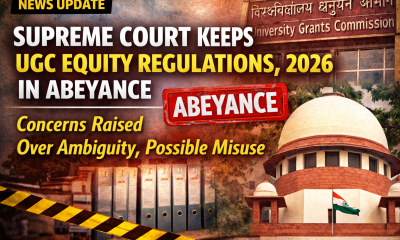
Supreme Court Keeps UGC Equity Regulations, 2026 in Abeyance; Raises Concerns Over Ambiguity and Possible Misuse
-
 Opinions & Columns9 months ago
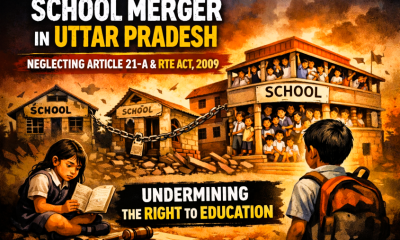
School Merger in Uttar Pradesh: A Stark Reflection of State Abdication of Educational Duty Undermining the Constitutional Mandate of Article 21-A and the RTE Act, 2009.